




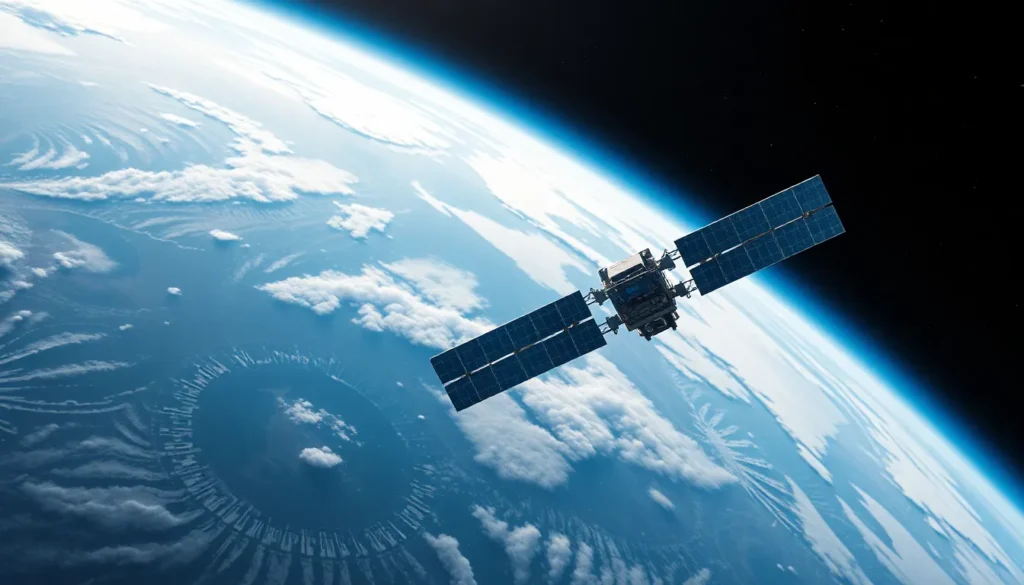
Orbital satellites play a crucial role in modern life, silently orbiting the Earth while providing essential services. From weather forecasting to global communications, these technological marvels help connect people and gather vital data about our planet. As they circle the Earth at incredible speeds, they enable advancements in various fields, including science, navigation, and environmental monitoring.
The rise of satellite technology has transformed how we understand our world. With thousands of satellites currently in orbit, their impact stretches far beyond simple communication. They contribute to disaster response, climate research, and even everyday conveniences like GPS navigation. Understanding how these satellites function and their significance can shed light on the future of technology and exploration.
Overview of Orbital Satellites
Orbital satellites are devices placed in specific orbits around the Earth, serving various purposes that enhance modern society. These devices facilitate communication, navigation, and environmental monitoring, contributing to advancements in technology and science.
Types of Orbital Satellites
- Communication Satellites:
- Communication satellites enable global telecommunication services, such as television broadcasting, internet access, and telephone connections. Notable examples include Intelsat and SES satellites, which provide services across multiple continents.
- Weather Satellites:
- Weather satellites monitor atmospheric conditions and provide critical data for weather forecasting and climate research. The National Oceanic and Atmospheric Administration (NOAA) operates satellites like GOES for real-time weather observation.
- Earth Observation Satellites:
- Earth observation satellites gather data related to land use, urban development, and natural resources. Satellites like Landsat collect imagery that assists in disaster management and environmental studies.
- Navigation Satellites:
- Navigation satellites provide accurate positioning information essential for GPS technology. The Global Positioning System (GPS) consists of a network of 31 operational satellites orbiting the Earth.
Functions of Orbital Satellites
- Data Transmission:
- Orbital satellites facilitate seamless data transmission across vast distances, connecting users via internet and phone lines.
- Surveillance:
- Surveillance satellites monitor military activity and environmental changes, aiding in national security and resource management.
- Research and Exploration:
- Research satellites assist scientists in studying celestial bodies and gathering astronomical data, enhancing our understanding of the universe.
Challenges and Future of Orbital Satellites
- Space Debris:
- The increasing amount of space debris presents a significant risk to operational satellites. Strategies for collision avoidance and debris mitigation are essential for sustainable satellite operations.
- Technology Advancements:
- The evolution of satellite technology, including miniaturization and improved propulsion systems, promises enhanced capabilities for future satellite missions.
- Regulatory Issues:
- International regulations and policies impact satellite launches and operations, creating a need for compliance among satellite operators.
Understanding orbital satellites and their functions supports the advancement of numerous industries, highlighting their invaluable role in contemporary society.
Types of Orbital Satellites

Orbital satellites vary in function and purpose, serving critical roles across multiple sectors. The main types include communication satellites, Earth observation satellites, and scientific research satellites.
Communication Satellites
Communication satellites facilitate global telecommunication services. They relay signals for television, internet, and phone communications. Positioned primarily in geostationary orbits, these satellites maintain a fixed position relative to Earth. Common examples include Intelsat and SES satellites that support broadcasting and broadband services. Communication satellites enhance connectivity, particularly in remote areas lacking terrestrial infrastructure.
Earth Observation Satellites
Earth observation satellites monitor atmospheric and terrestrial changes. They gather crucial data regarding climate, land use, and natural resources. Operating in various orbits, such as polar and sun-synchronous orbits, these satellites assist in disaster management and environmental monitoring. Notable examples include NASA’s Landsat and ESA’s Sentinel satellites, which provide vital imagery for research and policymaking. Earth observation satellites contribute valuable insights into climate patterns and help identify areas requiring intervention.
Scientific Research Satellites
Scientific research satellites conduct experiments and gather data for various scientific disciplines. These satellites support astronomy, biology, and physics research by observing phenomena beyond Earth’s atmosphere. Examples include the Hubble Space Telescope and the International Space Station, which enable groundbreaking discoveries. Scientific research satellites contribute to advancements in knowledge about the universe and physical laws, driving innovation across different fields.
Key Functions and Applications
Orbital satellites perform crucial functions that impact various sectors, enhancing our understanding and capabilities in multiple areas, including weather monitoring, global navigation, and telecommunications.
Weather Monitoring
Weather monitoring satellites gather atmospheric data, providing real-time information on weather patterns and forecasts. These satellites utilize advanced sensors to track temperature, humidity, wind speed, and precipitation levels. For instance, the Geostationary Operational Environmental Satellites (GOES) offer continuous observations of storm systems, enabling timely warnings and effective disaster preparedness.
Global Navigation
Global navigation satellites, primarily part of the Global Positioning System (GPS), enable precise location tracking for navigation and mapping. These satellites transmit signals to GPS receivers on the ground, allowing for accurate positioning within meters. Systems like Galileo and GLONASS complement GPS technology, providing enhanced accuracy and reliability for applications in aviation, marine, and automotive sectors.
Telecommunications
Telecommunications satellites facilitate global communication by transmitting signals for television, internet, and telephone services. Positioned in geostationary orbits, these satellites maintain a fixed position relative to the Earth, allowing for uninterrupted service. Notable examples include Intelsat and SES, which support millions of connections worldwide, improving communication infrastructure, especially in remote locations.
Recent Advancements in Orbital Satellites
Recent advancements in orbital satellites reflect significant progress in technology and capabilities. Innovations enhance their performance, expand applications, and address critical challenges.
Miniaturization of Satellites
Miniaturization of satellites enables cost-effective solutions. Small satellites, or CubeSats, now deliver high-resolution imaging and data analysis comparable to larger counterparts. They provide environmental monitoring, disaster response, and telecommunications at reduced costs.
Enhanced Communication Technology
Enhanced communication technology offers increased bandwidth and improved signal quality. High-throughput satellites (HTS) provide faster internet access globally. Companies like SpaceX and OneWeb lead efforts to deploy extensive satellite constellations that support internet connectivity in underserved regions.
Advanced Listening and Imaging Systems
Advanced listening and imaging systems allow for more precise data collection. Satellites equipped with synthetic aperture radar (SAR) can penetrate cloud cover and darkness to monitor changes in land use. Organizations like Planet Labs utilize this technology for agriculture, urban development, and disaster assessment.
Artificial Intelligence Integration
Artificial intelligence integration streamlines satellite operations and data analysis. AI algorithms process vast amounts of data quickly, enabling real-time decision-making. For example, the European Space Agency employs AI to classify land cover and detect environmental changes effectively.
Space Debris Management Innovations
Space debris management innovations aim to address a growing concern. Techniques such as active debris removal and end-of-life regulations for satellites focus on reducing clutter in orbit. Projects like RemoveDEBRIS showcase experimental technologies to capture and deorbit space debris.
International Collaboration
International collaboration drives satellite advancements and promotes the sharing of data and resources. Initiatives like the European Union’s Copernicus program unite countries to improve Earth observation capabilities for climate research and disaster management.
Exploration of New Orbits
Exploration of new orbits diversifies satellite capabilities. Low Earth Orbit (LEO) constellations offer reduced latency and enhanced connectivity for communication applications. Geostationary satellites continue providing stable services for broadcasting and telecommunications.
Continued investment in satellite research and development suggests an ongoing trajectory of innovation, enhancing capabilities across multiple sectors.
Challenges and Future Trends
Orbital satellites face several significant challenges that impact their design and operation. Space debris poses a critical risk, as millions of defunct satellites and fragments crowd space, increasing the likelihood of collisions. Technology advancements introduce complexity, requiring continuous updates and maintenance to keep satellites operational. Regulatory issues complicate satellite launches and operations, necessitating international cooperation to establish comprehensive guidelines.
Future trends indicate a shift towards enhanced capabilities and innovative solutions. Miniaturization continues to drive costs down, enabling the use of CubeSats for various applications, such as high-resolution imaging and scientific research. High-throughput satellites (HTS) promise faster internet access, supporting global telecommunications networks and expanding service to underserved areas.
Artificial intelligence integration optimizes satellite operations and data management, allowing for real-time insights and efficient processing of large datasets. Advanced space debris management strategies, including active debris removal and improved tracking systems, are under exploration to mitigate the risks associated with orbital congestion.
International collaboration fosters shared innovation and resource pooling, exemplified by programs like the European Union’s Copernicus initiative. The focus on Low Earth Orbit (LEO) constellations enhances connectivity and reduces signal latency, paving the way for new applications in telecommunications and Earth observation. Continued investment in satellite research and development drives an ongoing trajectory of innovation, enhancing capabilities across diverse sectors.
Orbital satellites have become indispensable tools in today’s world. Their ability to monitor weather patterns enhance global communications and gather vital data about the Earth impacts countless sectors. As technology continues to evolve the future of satellite applications looks promising. Innovations like miniaturization and artificial intelligence are paving the way for more efficient operations and enhanced capabilities.
Addressing challenges such as space debris and regulatory issues will require ongoing international collaboration. The advancements in satellite technology not only improve connectivity but also deepen our understanding of the universe. With each leap forward in satellite capabilities society stands to gain valuable insights and solutions to pressing global challenges.