


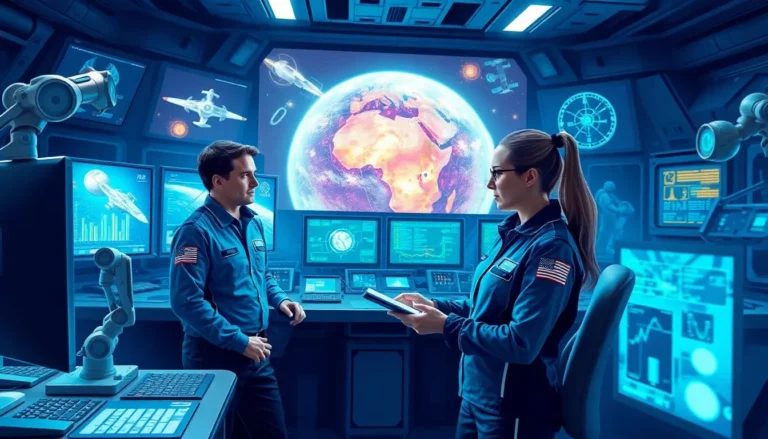


Imagine zipping through the cosmos like it’s just another day at the office. Future space travel technology isn’t just a sci-fi fantasy; it’s on the verge of becoming our new reality. With advancements that could make interstellar vacations as common as weekend getaways, the sky is no longer the limit.
Overview of Future Space Travel Technology
Advancements in future space travel technology promise to revolutionize how humans explore the cosmos. Companies like SpaceX and Blue Origin lead the charge with reusable rockets, significantly reducing costs. Innovative propulsion systems, such as ion thrusters and nuclear thermal engines, aim to enhance travel speed and efficiency.
The emergence of space elevators presents a groundbreaking concept. This technology could allow transport from Earth to orbit without traditional rocket launches, offering a more sustainable solution. Concepts involving the manipulation of gravitational fields for propulsion might become integral to interstellar travel.
Robotic spacecraft and AI-driven technologies play a crucial role in future missions. They can operate autonomously, enhancing mission success rates while minimizing risks to human life. Deployment of advanced habitats could support long-duration missions, allowing humans to live and work in space comfortably.
Terraforming concepts propose transforming celestial bodies into habitable environments. Mars colonization efforts focus on using local resources for sustainable life support systems. Such proposals highlight humanity’s commitment to making other planets home away from Earth.
Collaboration between public and private sectors accelerates innovation. International partnerships in space exploration encourage knowledge sharing and resource pooling. These combined efforts create a robust foundation for rapid advancements in technology.
Advancements in communication technologies support deep-space missions. Laser communication systems promise high-speed data transfers between Earth and distant spacecraft. Enhanced real-time communication reduces the lag that typically hampers mission operations.
The next era of space exploration relies on these evolving technologies. Increasing public interest and investment amplify the drive for breakthroughs. Future space travel may become an exciting reality, making the cosmos more accessible than ever before.
Key Innovations Shaping Space Travel
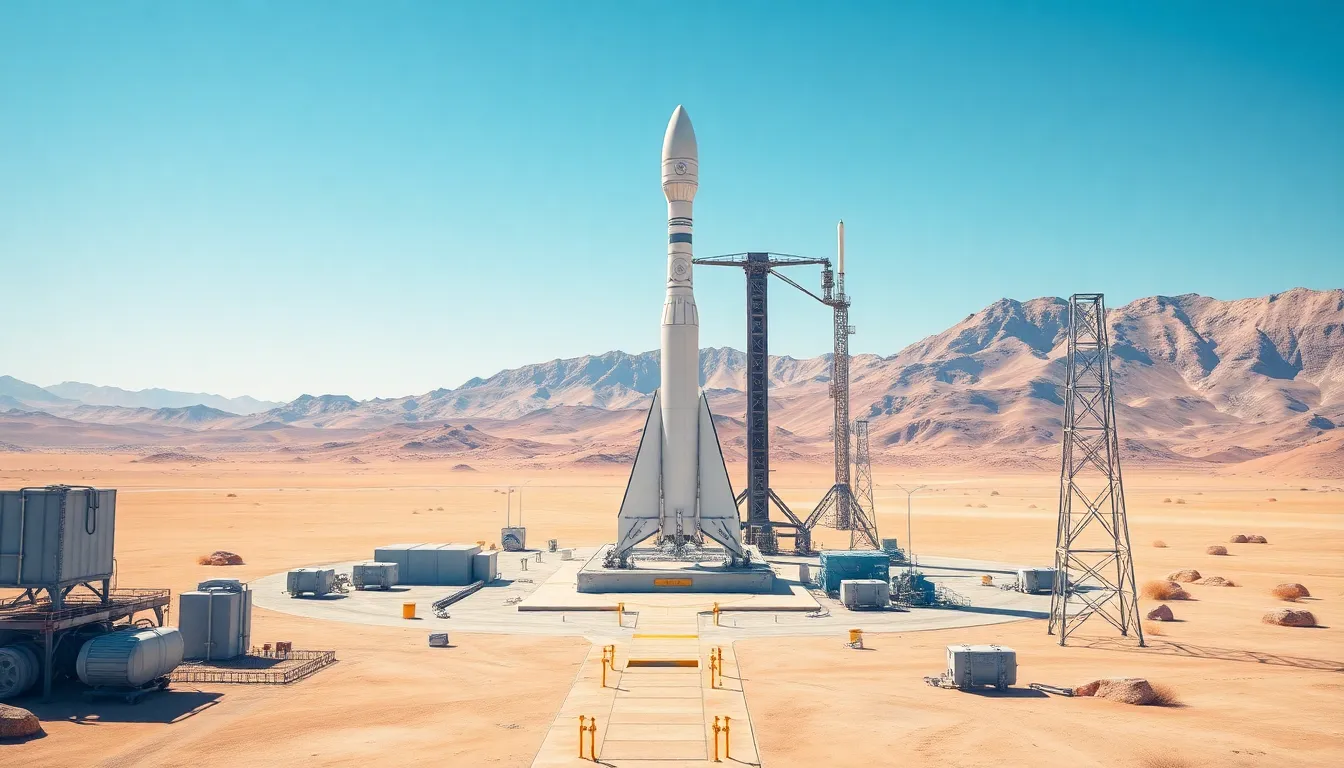

Innovations in space travel technology promise to transform exploration and make distant planets reachable. Propulsion methods and reusable rocket technologies stand out as critical advancements driving this evolution.
Propulsion Systems
Innovative propulsion systems significantly enhance travel efficiency. Ion thrusters provide a more fuel-efficient option for long-duration space missions. Nuclear thermal engines increase thrust levels, allowing spacecraft to reach distant destinations faster. Both technology types focus on improving reliability while reducing flight times. Concepts such as plasma engines also show potential, offering the capability for rapid acceleration. These advancements position space travel as not just possible but accessible in the near future.
Reusable Rockets
Reusable rockets revolutionize launch costs and mission feasibility. Companies like SpaceX have established successful models that return to Earth, allowing multiple flights. These vehicles reduce production expenses significantly, making space activities more sustainable. Reusability encourages more frequent launches, promoting scientific research and exploration missions. Furthermore, the efficiency gained from fetching rockets minimizes waste, aligning with broader environmental goals. This shift supports a growing commercial space industry while enhancing overall mission success rates.
The Role of AI and Robotics
Artificial intelligence and robotics are pivotal in advancing future space travel technology. Their integration into various aspects of missions enhances efficiency, safety, and sustainability.
Autonomous Spacecraft
Autonomous spacecraft operate independently, significantly reducing the need for constant human oversight. Equipped with advanced AI, these vehicles make real-time decisions based on flight conditions and mission parameters. Spacecraft like NASA’s Mars rovers demonstrate precise navigation and data collection without direct input from operators. Such technology allows missions to continue efficiently, even in the vastness of space, where communication delays occur. Leveraging machine learning algorithms, these vehicles improve their performance over time, adapting to challenges encountered during their journeys.
Robotics in Space Exploration
Robotic technology drives many initiatives in space exploration, performing tasks that would be perilous for humans. Robots conduct maintenance on spacecraft, conduct repairs, and collect samples from celestial bodies. The ongoing development of robotic arms and drones enhances the ability to operate in environments where human presence is limited or impossible. Systems like the European Space Agency’s ExoMars rover utilize advanced robotics to analyze the Martian surface for signs of past life. By minimizing human risk and extending operational capabilities, robots become indispensable allies in unlocking the mysteries of the universe.
Sustainable Practices in Space Travel
Sustainable practices are crucial for future space travel. They ensure minimal environmental impact while maximizing efficiency.
Solar Power Utilization
Solar power serves as a key energy source for spacecraft and habitats. Solar panels harness sunlight, converting it into electricity, which can sustain life-support systems and onboard instruments. NASA’s Solar Electric Propulsion (SEP) systems leverage solar energy for thrust, allowing efficient travel without the need for extensive fuel supplies. Such innovations reduce reliance on traditional fuels, enhancing sustainability during long-duration missions. Multiple space missions are now utilizing solar sails, which exploit sunlight for propulsion, demonstrating the viability of renewable energy in space.
Recycling in Space Missions
Recycling systems play a vital role in managing resources during missions. Closed-loop life support systems recycle air, water, and waste, drastically reducing the need for resupply from Earth. The International Space Station (ISS) exemplifies this approach, purifying water and transforming waste into usable materials. Researchers are also developing technologies for in-situ resource utilization (ISRU), allowing astronauts to convert local resources into vital supplies. These strategies promote sustainability by minimizing waste and conserving resources, ultimately supporting longer missions and potential colonization efforts.
Challenges and Considerations
Future space travel technology encounters various challenges that must be addressed to ensure successful missions. Understanding safety and ethical implications is crucial as exploration extends beyond Earth.
Safety and Risk Management
Safety remains a top priority in space travel. Assessing risks associated with long-duration missions informs decisions on spacecraft design and operation. Companies like SpaceX and Blue Origin prioritize reliability in their systems, striving to develop technology that minimizes failure chances. Routine safety drills prepare crews for potential emergencies, which can occur in space. Monitoring health impacts of microgravity on astronauts also plays a significant role in mission planning. Agencies focus on developing life support and survival systems that provide redundancy, ensuring crew well-being even during unforeseen circumstances.
Ethical Implications
Ethical dilemmas surface as humanity ventures into space. Questions regarding the potential colonization of other planets warrant careful consideration. Evaluating the rights of extraterrestrial environments draws attention, as space exploration should avoid harm to celestial bodies. International cooperation promotes responsible practices to safeguard these environments. Prioritizing sustainable methods, such as waste management and resource utilization, ensures preservation for future exploration. Balancing human aspirations with ethical responsibilities is essential as missions expand into deeper space.
The future of space travel technology holds immense promise for humanity’s journey into the cosmos. With innovative propulsion systems and sustainable practices, interstellar travel could soon become a reality. Companies are pushing boundaries and making space more accessible than ever before.
As advancements continue, the integration of AI and robotics will enhance mission success while prioritizing safety. The ongoing collaboration between public and private sectors fosters a spirit of innovation that drives the industry forward.
While challenges remain, the commitment to ethical practices ensures that exploration aligns with responsible stewardship of celestial bodies. The next chapter in space exploration is on the horizon, and it’s set to redefine humanity’s relationship with the universe.