





Nestled in the heart of Pasadena, NASA’s Jet Propulsion Laboratory (JPL) is where dreams of interstellar adventure come to life. This isn’t just any ordinary lab; it’s a cosmic playground where brilliant minds craft the next generation of space exploration. Imagine a place buzzing with scientists who are as passionate about Mars rovers as kids are about candy.
Overview of NASA Pasadena
NASA’s Jet Propulsion Laboratory (JPL) serves as a critical center for the exploration of our solar system. Located in Pasadena, California, JPL plays a vital role in advancing technology for space missions. Teams at JPL focus on the design, construction, and operation of robotic spacecraft, significantly contributing to missions that include Mars exploration.
Innovative projects define JPL’s work, with notable examples including the Perseverance and Curiosity rovers. These rovers gather crucial data and analyze Martian soil and atmospheric conditions. Research at JPL emphasizes the use of cutting-edge engineering and scientific methods to solve complex problems.
Collaboration is prominent among scientists, engineers, and researchers at JPL. They harness their diverse expertise to bring ambitious projects to fruition. Continuous advancements in aerospace technology illustrate the importance of teamwork and innovation in achieving mission objectives.
JPL’s contributions extend beyond Mars. They participate in missions to study asteroids, comets, and other celestial bodies, providing invaluable insights into the origins of the solar system. Projects like the Europa Clipper aim to explore moons and assess the potential for life beyond Earth.
Public engagement also forms a core aspect of JPL’s mission. Outreach programs and educational initiatives inspire future generations of scientists and engineers. By fostering interest in space exploration, JPL continues to cultivate a passion for discovery among young minds.
Overall, the facility’s dedication to exploration and education underscores its significance within NASA and the broader space community.
History of NASA Pasadena
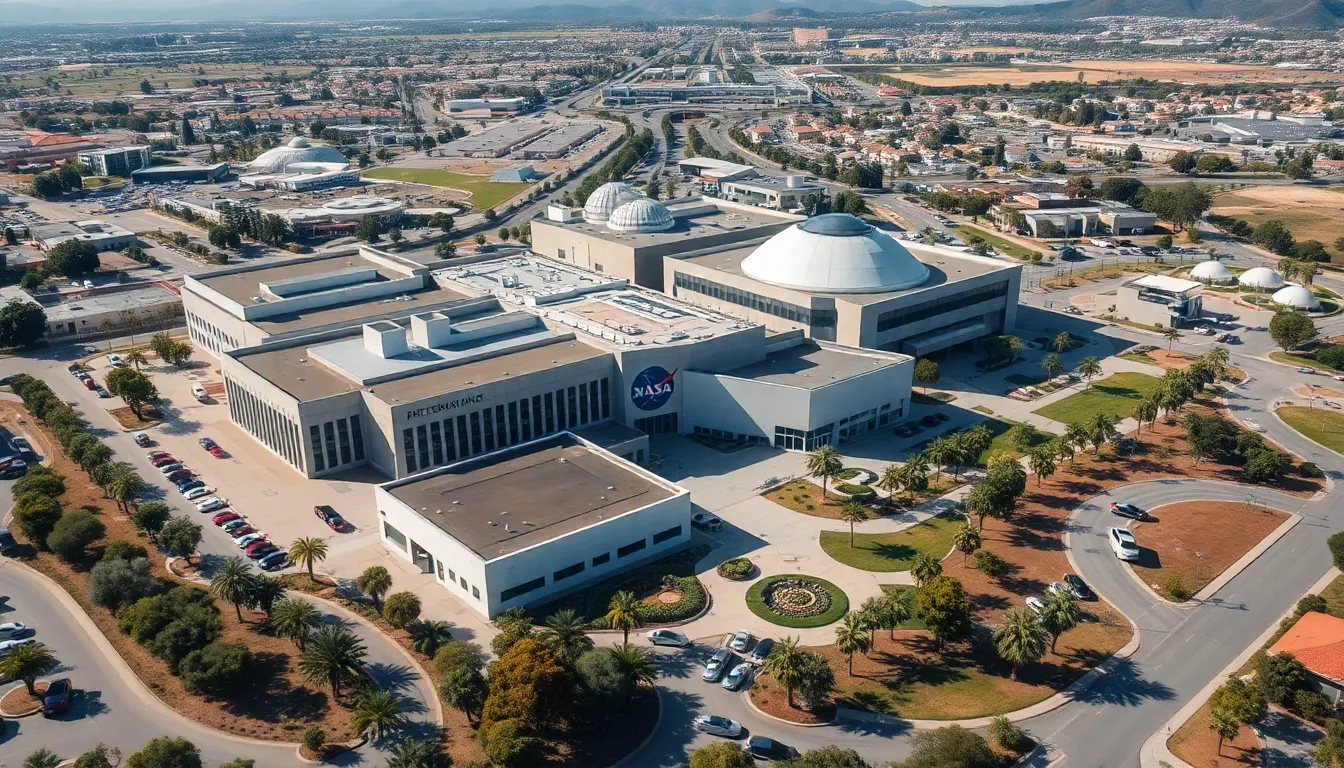
NASA’s Jet Propulsion Laboratory (JPL) in Pasadena boasts a rich history marked by groundbreaking advancements and influential missions in space exploration.
Key Milestones
Establishment of JPL occurred in 1936, initially as the Guggenheim Aeronautical Laboratory. The laboratory transitioned to NASA in 1958, aligning its focus with space exploration. The launch of the first successful satellite, Explorer 1, in 1958 marked a major achievement for JPL. Progress continued with the Mariner missions in the 1960s, culminating in Mariner 4’s flyby of Mars in 1965, capturing the first images of another planet. The 1976 Viking missions further cemented JPL’s reputation with successful landings on Mars, enabling detailed geological analysis. In 2004, the Spirit and Opportunity rovers began their quest, providing extensive data on the Martian landscape. Each milestone showcases JPL’s commitment to exploring the cosmos.
Notable Achievements
Significant achievements define JPL’s legacy. The Voyager missions revolutionized space exploration, providing humanity’s first close-up images of Jupiter, Saturn, Uranus, and Neptune. Their discoveries transformed understanding of these gas giants and their moons. Success in the Mars Science Laboratory culminated with Curiosity’s landing in 2012, advancing the search for past life on Mars. Noteworthy exploration of the Moon also occurred with the Lunar Reconnaissance Orbiter, producing detailed maps to aid future missions. Innovative projects like the Perseverance rover, launched in 2020, seek to collect samples for potential return to Earth. These achievements highlight JPL’s leadership in the aerospace sector, constantly pushing the boundaries of exploration.
NASA Pasadena Facilities
NASA’s Jet Propulsion Laboratory (JPL) stands at the forefront of space exploration, combining research, engineering, and education. Facilities here support various missions and projects designed to push boundaries.
Jet Propulsion Laboratory
Jet Propulsion Laboratory serves as NASA’s primary center for robotic exploration of planets. Established in Pasadena, JPL has led groundbreaking missions, including Mars rovers like Perseverance and Curiosity. It focuses on designing and operating advanced robotic systems. Engineers and scientists collaborate daily within its labs, contributing to everything from new technology to mission planning.
Research and Development Centers
Research and development centers at JPL play crucial roles in pioneering aerospace technology. Each center focuses on specific disciplines, such as propulsion systems, robotics, and planetary science. Together, these facilities enable impactful innovations and solutions for space missions. Engineers often integrate insights from these centers to enhance mission outcomes, ensuring high performance for challenging explorations.
Educational Programs
JPL emphasizes educational programs that promote learning and engagement in space science. These initiatives target students of all ages, fostering a deep interest in STEM fields.
Community Outreach
JPL actively engages with local schools and communities through various outreach programs. Workshops and events provide hands-on experiences, allowing students to explore science and technology. Programs like the “NASA Night Sky Network” connect educators with resources to inspire a love for astronomy. Partnerships with local organizations help broaden access to educational opportunities, ensuring inclusive participation. Teachers benefit from professional development sessions that equip them with innovative materials for teaching. Community-driven projects encourage collaboration between JPL scientists and local youth, exposing them to real-world applications of science.
Internships and Fellowships
Internships at JPL offer valuable experiences for students pursuing careers in STEM. Engineering, science, and technology disciplines are emphasized, with internships designed to develop practical skills. Students gain insights by working alongside leading researchers, enhancing their understanding of aerospace challenges. Fellowships provide graduate students with opportunities to engage in advanced research, contributing to ongoing projects. The application process is competitive, ensuring that candidates possess strong academic backgrounds. Successful participants often transition into full-time roles, having built essential networks and knowledge during their time at JPL.
Current Projects and Missions
NASA’s Jet Propulsion Laboratory engages in various pioneering projects and missions with focused areas of exploration. Significant efforts emphasize robotic innovation that pushes boundaries in space science.
Space Exploration Initiatives
NASA’s JPL is currently orchestrating several high-profile space exploration efforts. Missions like the Perseverance rover provide vital data on Martian geology and climate. The Europa Clipper project aims to investigate Europa’s icy surface and subsurface ocean, assessing its potential for hosting life. Additionally, the Mars Sample Return mission focuses on retrieving samples from Mars for detailed Earth-based analysis, enhancing our understanding of the planet’s history. These initiatives form the backbone of JPL’s commitment to advancing human knowledge of the solar system.
Earth Science and Robotics
Earth science initiatives at JPL address critical environmental challenges. The lab employs cutting-edge robotic technology to monitor Earth’s climate, track natural disasters, and study land use changes. Projects like the Surface Water and Ocean Topography (SWOT) satellite enhance understanding of Earth’s water bodies and their contributions to climate change. A combination of innovative robotics and Earth observation technology empowers scientists to gather and analyze data for better climate resilience strategies. Collaboration among different experts ensures these projects yield impactful insights and drive scientific discovery.
NASA’s Jet Propulsion Laboratory in Pasadena stands as a beacon of innovation and exploration. Its commitment to understanding both Mars and Earth showcases the power of collaboration among scientists and engineers. JPL not only pushes the boundaries of aerospace technology but also inspires the next generation through educational initiatives. As it continues to embark on groundbreaking missions like the Europa Clipper and Mars Sample Return, JPL remains at the forefront of space exploration, driving humanity’s quest for knowledge beyond our planet. The future looks bright for JPL as it tackles new challenges and unravels the mysteries of the universe.